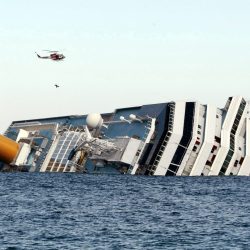
We might consider making things that can’t sink. One good way to do this is to not build boats. But there are landslides, and many houses are placed along the sea. Once you open the door to non-sinkability, it’s hard to know where you reasonably stop. Or perhaps a boat made of water, but that
The New Inquiry is proud to announce that Reanimation Library, the project of our contributor and friend Andrew Beccone, will be temporarily relocated to New York City’s Museum of Modern Art in conjunction with the Print/Out exhibition, part of Print Studio from January 23 until March 9.
"While he was peacefully snoring up on the mountain, a great revolution was taking place in the world - indeed, a revolution which would, at points, change the course of history. And Rip Van Winkle knew nothing about it; he was asleep."
Grindr is an app men can put on their phones to find other men to have sex with. But it automates the work that once made a subversive and politically potent world.
In this way, the gay political project wasn’t just emancipatory or messianic, nor could it be exhausted by a list of demands; from within, it undercut capitalism’s charge that there be no alternative by fucking a different world into being.
Tradition — “how things are done here” — has been fatally disrupted. We can enter an elevator in any city or an Italian restaurant in any American town and understand what to expect and what to do. And thanks to the universality of money and the pervasive norms of capitalist market exchange, we trust we
The hope is that every student has a teacher or two over a decade and a half that really makes them question and think, but either way, we silently acknowledge that they’ll spend the majority of their young vigor-filled lives quivering at the arbitrary mercy of petty kooks and jowly tyrants.
When I traced my face shape onto my mirror with lipstick, I was bowing to the needs of my inner slave. I was reaching toward the looking-glass and willing the world contained therein to reveal a great insight. Tell me my face shape so I may never again have an unflattering haircut, ye mirror!
I do not mean to imply that these were the best films (if you want to call them that) of the decade. Jean-Luc Godard, Michael Haneke, the Dardenne brothers, and Bela Tarr all have claims on that title. But some kind of tipping point has been reached.