twitter
facebook twitter tumblr newsletter
dtakelogo
Double Take
By Teju Cole
A blog on vision, visuality, and visual culture
rss feed

Wicked Pictures

I’m thinking of photographs that draw us into the dark star of the human predicament rather than into contemplation of some specific injustice.

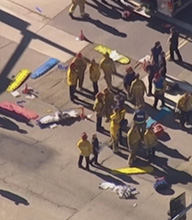
Why do we photograph the aftermath of misadventure? Most of this catalog is unseen. The photos lie archived in the basements of police departments the world over. A few make it into newspapers. The photographs of suicides, wrecks and crashes taken by Enrique Metinides, Weegee’s Mexican descendant, satisfied a local hunger for scandal. Now they have migrated from the tabloids to gallery walls. Black and white can sometimes protect us. Color like Metinides’ is pepper in the eye.

But in color or otherwise, these are images that sidestep love. Their moral registration is off. The pictures don’t map onto what we wish to know about the world: they are unbearable but (are they?) necessary. In any case, we look, and look away, and look again.

Many other abject pictures are cognate to these: among Roger Fenton’s 1855 pictures of the Crimean War are those that show no dead bodies, that show only death’s hush. Similarly, only persecution’s traces remain in Tim Greyhavens’ recent photographic documentations of the places out West where Chinese-Americans were lynched or massacred. They are pictures of nothing, pictures of the void, and in them captions do most of the work.

In a book called Death Scenes: A Homicide Detective’s Scrapbook, the captions do even more work: taken alone they are sufficient to strike the fear of God into the godless and to shake the faith of the believer:

“Children who played with dynamite.”

“Fifteen year-old boy suicide with gun.”

“Severely mutilated woman.”

“Husband looking at 74-year-old wife who was raped and murdered.”

After such captions, who needs pictures?

Just as troubling are the photographs taken between 1890 and 1910 in rural Wisconsin and collected in Wisconsin Death Trip. Whatever sheen of dignity adheres to pictures of war is missing here. These are photographs not merely of human cruelty but of human helplessness. They remind us (we do not wish to be reminded) that there will always be a minority of people whose luck is bad in the extreme. Sure, much of this “bad luck” is systemic, and is not strictly speaking only a matter of fate. But in the particular it rarely seems so, since many manage to evade its evil grasp. By some perverse logic, those who don’t evade it seem sought out by it. Misadventure feels personal.

For a while in 2007 George Osodi stalked Nigerian roads, taking with him an actor dressed as the Devil. Together, they haunted the scenes of wrecks. The photos that emerged—straightforward color photos of the torqued hulks of crushed trucks and cars on the Lagos-Ibadan expressway, the Benin-Ore expressway and other carriageways of death—are like Metinides’, but with the sensation leached out. Metinides’ photos, taken minutes after, are nasty and exciting. Only the trace of sorrow remains in Osodi’s deadpan pictures. Bright blue sky, bright painted metal: they are as boring as death.

Looking at them I remember the people I loved who died in such circumstances. I remember telephone calls, the cracked voice at the other end of the line. I remember too how once, twice, I came close to such erasure myself, close to sacralizing some meaningless bend on the road.

Places are the fossils of events. They retain the memories of the terrors they’ve seen. A drive on a Nigerian highway is among other things a memorial service, a dirge of twisted metal under the sign of the iron god Ogun. Soyinka, decades before he was appointed the country’s top road safety official (Nigeria is thick with such ironies), wrote:

Traveler, you must set out
At dawn. And wipe your feet upon
The dog-nose wetness of the earth.

The right foot for joy, the left, dread.
And the mother prayed: Child,
May you never walk
Where the road waits, famished.

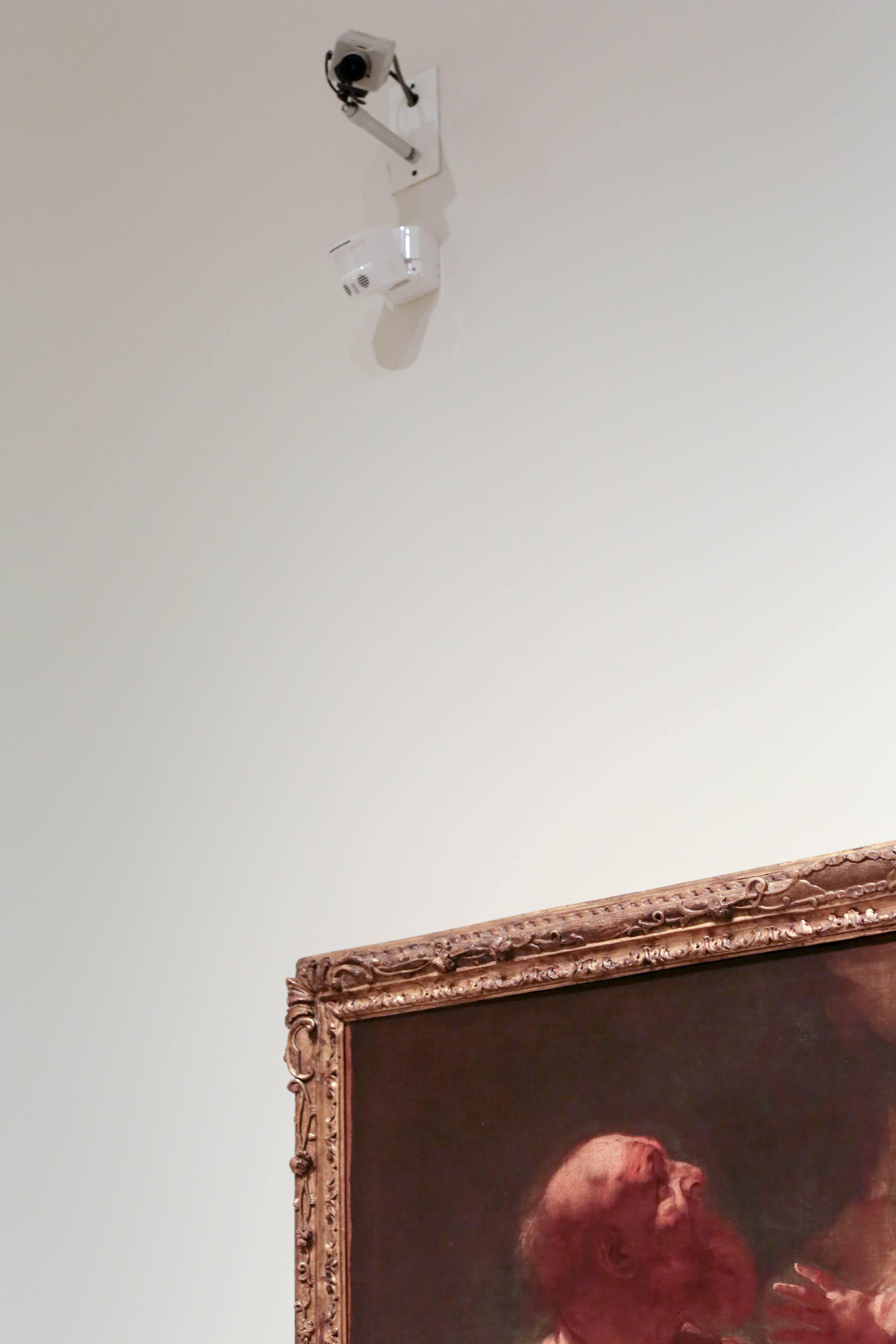
Photographs of fate’s aftermath protest this world of famished roads. They insist that it is the world that is wicked, not the photos of it. Such photos work as surveillance pictures, keeping disinterested track of the past’s future.

Book Covers of the Year

One of the best ways to judge a book is by its cover.

Here are some of the better book covers of the year, as selected for the New York Times by “people in an around the world of graphic design.”

I love John Gall’s cover for Houellebecq’s latest (slide 1) and Keith Hayes’ design for Bloodland (slide 13). I also like slides 4 and 18, but many of the other covers bored me somewhat. One of my least favorite is slide 6, for Chris Ware’s Building Stories, chosen, as it turns out, by the very same John Gall whose own designs I adore. What do I dislike about it? The tricksy but depthless cartoonishness of it, as opposed to the cartoon-like mystery of the Houellebecq. I can see that it’s good, but I don’t love it. I like a book design to contain some element of worry. But so many people have recommended Ware’s book that I will read it anyway.

General thoughts: I don’t think American publishing uses photographs often enough or interestingly enough. Many covers end up typographically correct but vague. Too many feel as though they are trying to impress other graphic designers; many have a strong whiff of design school. But there’s no arguing about taste.

My favorite book cover design of the year was the one for Patrick McGuinness’ The Last Hundred Days. Simple, specific, memorable. I also liked Macmillan’s bold Bolaño reissues.

The Strangers

We often say, in praising something from the past, that it is “recognizably modern.” When we say that Emma Bovary or Clarissa Dalloway are modern, or that Michelangelo’s David looks like a real teenager, or that Degas’ paintings of the Place de la Concorde or the horse races are full of a modern life like our own, we take it for granted that these terms of praise are self-sufficient. Verrocchio’s David, fine as it is, owes more to the Gothic than Michelangelo’s does. It’s not as recognizably modern and is therefore, somehow, not as good. (Our colloquial usage of “modern” is elastic, but we generally know what we mean by it, and one of its most vivid senses is “that which reminds us of ourselves”).

Fictional characters that have an inconstant inner life are more like us and, therefore, better than those that don’t. The Renaissance, it is universally acknowledged, was an improvement on what came before, whether we call that the Medieval Age, the Middle Ages, the Dark Ages, or the Gothic Period. And the instinct to think of it as better survives our brave efforts to disavow just that very instinct.

Why should it be so? Why should a certain increase in verisimilitude–for this seems to be what is at stake here, emotionally fleeting verisimilitude in particular–be taken for an improvement in quality?

After I came out of the Bargello yesterday, I was dazed by a contrary notion. In light of the sculptures by Ghiberti and Donatello, particularly those from the earlier parts of their careers and, going further back, in light of the sober 14th century stone and marble Madonnas, and the intricate 13th century ivory carvings from France and Italy, I felt a sudden call to the pre-secular. What drew me in was not simply the religious, which would imply creeds, but rather whatever that quality was in art that had not yet found its way to the permissiveness and sensual drama that began to predominate after 1420. Masaccio and Fra Angelico in painting and Brunelleschi and Donatello in sculpture mark the switch, though all four continued to retain traces of the international Gothic style. And the switch, of course, led to wonders.

Well. A strange thing happens: sometimes you see better the qualities of what’s about to change. I love the International Gothic Style (to give the artistic tendency its official name), that isn’t new, but seeing in one go so many works from a period when it was all beginning to change clarified for my eye not only what was being gained—the official story about the rebirth of art of course contains truths—but also what was being just as quickly lost.

There’s a raw strength in an art that keeps its power hidden under the surface, an art with genuinely mystical referents. There’s a seriousness that is the seriousness of early polyphony, of guilds, of anonymous carvers of genius (and many of indifferent ability), of tenebrous cathedrals in distant market towns, and the understanding that man is not, and ought not to be, the measure of all things. There’s something in what historians of African Art used to call the “God-regarding” art.

These are images that are often not recognizably modern. They are depictions of people who do not share our passions, or at least not too many of them, people who do not meet us halfway, depictions that cannot be praised in the self-evident terms we put on Titian portraits or Hamlet; they lack the quicksilver dynamism of the Renaissance or of the modern in its various iterations; for teachers, they are not easy images to teach properly; and they nevertheless transcend their craftsmanship.

The subjects of these images, as well as the artists who made the images, are people who might find us—in our free state, with our improvised ways—unbuttressed, undefended, pitiful. The appeal of the pre-modern (this is what I’m thinking in the natural light of the old museum) is in its strangeness, its estrangement from us, its trust in a system we’ve since jettisoned.

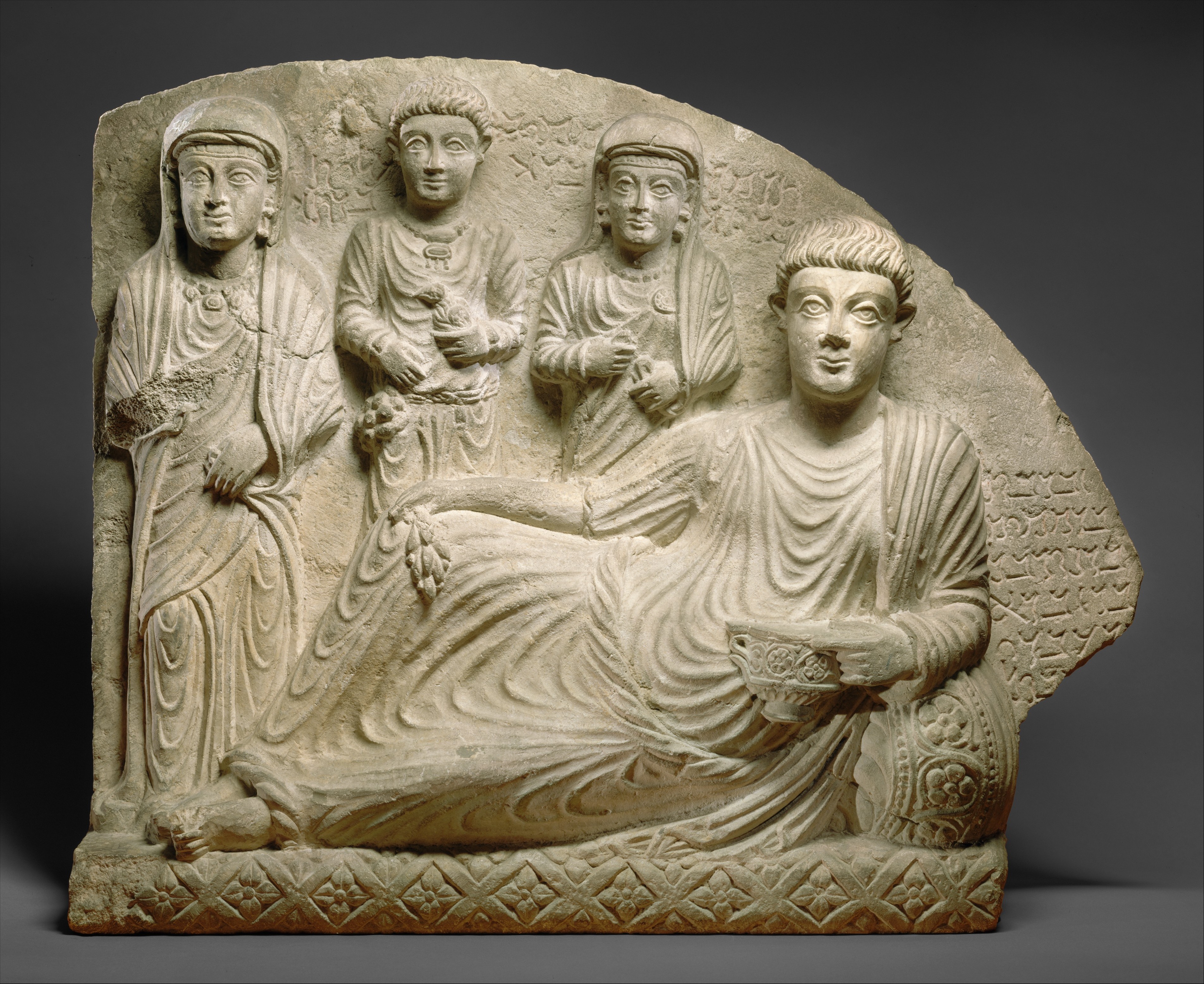
I looked at those faces carved by a solidly godly people in the 1200s and 1300s, looked at the comfortingly unrecognizable expressions: the set of the jaw, the boneless faces, the blank eyes, the mystical smiles. It is a quiet intensity shared not with the classical or Hellenistic past (which in the boom-bust cycle of history had also fallen for a while into humanism and sensuality) but with the archaic practices of pre-classical Greece, the Etruscans, and the Near East.

It is an older language, a calmer, darker language; no less human, but other; a language possibly recognizable to us, after all, but only really to our God-regarding selves.

Over the Static of Time

We went to Galluzzo, to the Certosa there. An old monk whose eyebrows were like brushes brought us in. It was late afternoon. Gray light fell on old stone. The view from up there was as it is in the illustration on a wine bottle: terraced green hills, grown over with vines and olive trees. Battlements and ancient stone buildings too, imprecise in the distance.

We’d cut short our purchase of grappa at the cloister’s liquor shop to join the guided tour. Who needs tours? But the Certosa offered no other option, no opportunity to wander through the large halls alone. We tailed the monk. 

Continue Reading