...His research interests include eighteenth-century aesthetic theory/philosophy, poetry, art history, media, and music. Currently Chris teaches for the Department of English and School of Communication at Loyola University Chicago. Contact:...
...the ambiguities of folklore, history, culture. Names, Trains, and Corporate Deals: Why Public Transit Shouldn’t Sell Naming Rights What to Read Next Batman wins the Cold War Not-quite-lost shadows Imperialistic...
...the ways that we've transformed celebrities into objects. It's a case study of culture-wide objectification: "Listen, I enjoy pop culture. I like movies and television, and I like pop music,...
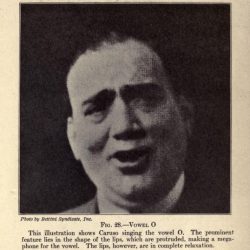
...The great Enrico Caruso taking us through the vowels as shown in Caruso's Method of Voice Production: the Scientific Culture of the Voice (1922) by Pasqual Mario Marafioti. When...
...doesn’t provide us with beauty and pleasure in the form of culture, art, music, literature, and, yes, food the way we’ve created it? To deny ourselves the chance to experience...
...--John Corbin, The Return of the Middle Class (1922) With higher wages came increased consumption of goods, among them furniture and cooking utensils. In time there developed a culture peculiar...
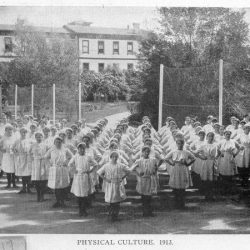
...variations in embodiment or identity. Further Reading: Todd, Jan. Physical Culture and the Body Beautiful: Purposive Exercise in the Lives of American Women, 1800-1870 . Mercer University Press, 1998. Verbrugge,...
...for popular storytelling in the broad culture and hip storytelling among the cinerati. But for most of us, the film might as well be a tree falling in one of...
...can and probably should investigate anyone, rationalizing a social hermeneutics of suspicion through the provision of the means to execute it. Paranoia is built into the culture, to the extent...
...Sue/Marty Stu character. But Cho doesn’t stop at experimenting with different identities—aspects of his own subjectivity go with him, flooding the characters he inhabits. In “The Sound of Music,” for...
...a neo-imperialist military project. Despite arguing for the American Pietà as an understudied U.S. visual culture, Tapia deals only briefly with other so-called American Pietàs, such as the 1995 image...
...distracting us. A culture of distraction doesn’t stop us doing really important things; it makes us believe that there really is something that is really important: capitalist production. Distractions only...
...now falls to terrorists, not novelists, to “alter the inner life of the culture.” If the attacks of the last decade have prompted many to perceive a world divided between...