twitter
facebook twitter tumblr newsletter
blog-shines-like-174
Shines Like Gold
By imp kerr
what matter who's speaking?
rss feed

Triple-Decker Weekly, 57

Has anyone ever been killed by a falling piano?

As life has evolved, its complexity has increased exponentially, just like Moore’s law. Now geneticists have extrapolated this trend backwards and found that by this measure, life is older than the Earth itself. [The Physics arXiv Blog]

Researchers at the University of Leeds may have solved a key puzzle about how objects from space could have kindled life on Earth. While it is generally accepted that some important ingredients for life came from meteorites bombarding the early Earth, scientists have not been able to explain how that inanimate rock transformed into the building blocks of life. This new study shows how a chemical, similar to one now found in all living cells and vital for generating the energy that makes something alive, could have been created when meteorites containing phosphorus minerals landed in hot, acidic pools of liquids around volcanoes, which were likely to have been common across the early Earth. [University of Leeds]

Modern humans are estimated to be about 200,000 years old, but 99% of progress has occurred in the last 10,000 years. What were we doing before that? […] Low Population: Until about 10000 BCE, world population never exceeded 15 million and mostly was around 1 million. Urban World History The present population of the world is 7 billion and 1 million is comparable to the population of a medium size city. When you have just a couple of million people spread in this big wide world, there is little that humanity could collectively build. Even if we assume that early human being could be as productive as us, their civilization could produce less than 1/1000 of what our society could do. Life Expectancy: From that point until 20th century, we had a very low life expectancy (about 30 years). Imagine if we all died by the time we reached 30, how much could we learn from our parents and how much can we teach our kids. Given the low life expectancy of early humans, there was not much time to learn and teach. We just started randomly doing whatever we could to survive. [Quora]

What he found is that employers would rather call back someone with no relevant experience who’s only been out of work for a few months than someone with more relevant experience who’s been out of work for longer than six months. In other words, it doesn’t matter how much experience you have. It doesn’t matter why you lost your previous job — it could have been bad luck. If you’ve been out of work for more than six months, you’re essentially unemployable. [Washington Post]

From assembly line robots to ATMs and self-checkout terminals, each year intelligent machines take over more jobs formerly held by humans; and experts predict this trend will not stop anytime soon. […] “By 2015, robots should be able to assist teachers in the classroom. By 2018, they should be able to teach on their own, and this will cause many teachers to lose their jobs.” […] The ultimate tool to replace doctors could be the nanorobot, a tiny microscopic-size machine that can whiz through veins replacing aging and damaged cells with new youthful ones. This nanowonder with expected development time of mid-to-late 2030s could eliminate nearly all need for human doctors. […] Experts estimate by 2035, 50 million jobs will be lost to machines […] and by the end of the century, or possibly much sooner, all jobs will disappear. Some believe the final solution will take the form of a Basic Income Guarantee, made available as a fundamental right for everyone. […] America should create a $25,000 annual stipend for every U.S. adult, Brain says, which would be phased in over two-to-three decades. The payments could be paid for by ending welfare programs, taxing automated systems, adding a consumption tax, allowing ads on currency, and other creative ideas. [IEET]

Men can’t read women’s emotions, study confirms.

People who worry habitually about separation and abandonment – the “anxiously attached” – tend to be highly skilled at lie detection, an attribute that means they excel at poker.

How Can I Avoid Procrastination?

How does the public engage with the new knowledge that advances in neuroscience produces?

Do Dogs Try to Hide Theft of Food?

Did you know Disney created its own confetti called ‘Flutterfetti,’ which was actually engineered to ‘flutter’ in the air better? Or that the parks will pump out a vanilla scent on Main Street because the smell triggers fond memories? [The Credits]

Man convicted for stealing more than $376,000 worth of copy machine toner while employed by NYC law firm.

Hedge-fund manager John Paulson’s wager on gold wiped out almost $1 billion of his personal wealth in the past two trading days as the precious metal plummeted 13 percent. Paulson started the year with about $9.5 billion invested across his hedge funds, of which 85 percent was in gold share classes. [Businessweek]

Gold Sell-Off Biggest in 30 Years.

What Happened The Last Time We Saw Gold Drop Like This?

Why is gold plunging? The most important factor is that global inflation is falling, reducing gold’s value as a hedge against rising prices.

Did Goldman Sachs release a note encouraging clients to short gold right after receiving the Fed’s FOMC leak information, due to the leak itself?

Cocaine Caused Financial Crisis, Ex-UK Drug Czar Says. [Thanks GG]

Virtual Bitcoin Mining Is a Real-World Environmental Disaster.

Trader pleads guilty to making unauthorized purchase of nearly $1 billion in Apple shares.

Apple is said to be getting very close to nailing down streaming licensing agreements with Universal Music Group and Warner Music.

Nobody really understands why listening to music — which, unlike sex or food, has no intrinsic value — can trigger such profoundly rewarding experiences. Salimpoor and other neuroscientists are trying to figure it out with the help of brain scanners.

Using brainwaves for authentication, instead of passwords.

Facebook Charging $1 Million For New, Intrusive Video Ads That Will Run In Users News Feeds. TV-Like ads can be bought for four broad demographic swaths.

The US Congress has severely scaled back the Stock Act, the law to stop lawmakers and their staff from trading on insider information, in under-the-radar votes that have been sharply criticised by advocates of political transparency. The changes mean Congressional and White House staff members will not have to post details of their shareholdings online. They will also make online filing optional for the president, vice-president, members of Congress and congressional candidates. […] The Stop Trading On Congressional Knowledge – or “Stock” – Act prohibited them from buying or selling stocks, commodities or futures based on non-public information they obtain during the course of their work. It also banned them from disseminating non-public information regarding pending legislation that could be used for investment purposes. […] Political watchdogs were dismayed. “Are we going to return to the days when public can use the internet to research everything except what their government is doing?” asked Lisa Rosenberg of the Sunlight Foundation, which monitors money in politics. [Financial Times]

The Federal Reserve said early Wednesday that it inadvertently e-mailed the minutes of its March policy meeting a day early to some congressional staffers and trade groups. Late this afternoon, the central bank released to reporters a list of more than 150 e-mail addresses that it says received the early e-mail on Tuesday afternoon. (The minutes had been scheduled for release a day later.) The list includes e-mail addresses for dozens of congressional staffers, along with contacts — many of them government-relations executives — at major banks, lobbying firms and trade groups. [WSJ]

We will provide the full list of people who manipulate and cheat the market shortly, but for now we are curious to see how the Fed will spin that EVERYONE got an advance notice of its minutes a day in advance without this becoming a material issue with the regulators, and just how many billions in hush money it will take to push this all under the rug. [Zero Hedge]

In psychology literature, “ask for the moon, settle for less” is known as the “door in the face” (DITF) technique. Unlike the “foot in the door” technique, in which the fulfillment of a small request makes people more likely to fulfill a large request, DITF uses an unreasonable request as a way of making somebody more likely to subsequently fulfill a more moderate request. The technique was first demonstrated by Robert Cialdini’s famous 1975 experiment in which students became more likely to volunteer for a single afternoon after first being asked to volunteer for an afternoon every week for two years. So, can research on DITF shed some light on why pursuing an assault weapons ban didn’t pan out? [peer-reviewed by my neurons]

Let’s say you ran one of the Fortune 10 companies. And for some reason, you wanted to ensure that this business would be hated by its customers, forever. What would you do? […] What I’d do is create a policy that makes it really hard for my company’s employees to ask questions of my company’s customers. I’d make it a struggle to collect feedback. In order to collect any form of feedback, I’d make it so that you had to first ask for permission from an underfunded and understaffed component of the central office of my corporation. Of course I’d also make it take at least six months to get this approval. That way, most of the people who wanted to ask my customers a question were immediately discouraged from doing so. […] I’d staff this office with economists and lawyers. […] Then, just to be especially perverse, what I’d do is encourage my company to use social media. I’d create policies around it, pushing my company to go online on Facebook and Twitter and stuff, and to have “authentic conversations” with our customers. I’d tell them that it was totally cool to use social media to informally do whatever they wanted, except to use that information to inform product or service decisions. This way, my employees will be completely cut off from their customers needs. And the only employees that actually make it to the customers are the people who know how to talk to the economists. That’ll make it so whatever inputs and outputs of my business are so incomprehensible that they’ll just create more frustration rather than solve problems. [And customers will] think they’re giving input to the company without that input actually making it anywhere useful. It’s a machievellian scenario that, sadly, I didn’t make up. This “corporate policy” is actually a law that makes your government act like this, and it’s nefariously named the “Paperwork Reduction Act.” It was the last bill signed into law by Jimmy Carter in 1980. [Information Diet]

A judge whose smartphone disrupted a hearing in his own courtroom has held himself in contempt and paid $25 for the infraction.

There are anecdotal reports that men who wear (Scottish) kilts have better sperm quality and better fertility. But how much is true?

In 1983 psychiatrist Giles Brindley demonstrated the first drug treatment for erectile dysfunction in a rather unique way. He took the drug and demonstrated his stiff wicket to the audience mid-way through his talk.

According to a meta-analysis published in the August edition of the Journal of Family Medicine, colon cleansing provides no known health benefits, only dangerous side effects including, in rare cases, death. [Gastroenterology & Endoscopy News] More: How to Make a Coffee Enema [both via Improbable]

“GB” is a 28 year old man with a curious condition: his optic nerves are in the wrong place. Most people have an optic chiasm, a crossroads where half of the signals from each eye cross over the midline, in such a way that each half of the brain gets information from one side of space. GB, however, was born with achiasma – the absence of this crossover. It’s an extremely rare disorder in humans, although it’s more common in some breeds of animals, such as Belgian sheepdogs. […] In the absence of a left-right crossover, all of the signals from GB’s left eye end up in his left visual cortex, and vice versa. But the question was, how does the brain make sense of it? Normally, remember, each half of the cortex corresponds to half our visual field. But in GB’s brain, each half has to cope with the whole visual field – twice as much space (even though it’s getting no more signals than normal.) [Neuroskeptic]

Struggling, trapped bed bugs are impaled by trichomes on several legs and are unable to free themselves. Scientists document how beans create a natural bedbug trap and, potentially, how it could be used to improve bedbug purging efforts.

Bears In Russia Are Addicted To Jet Fuel, Sniff It To Get High And Pass Out. [Thanks Erwin]

Traveller arrested smuggling live hummingbirds in his trousers.

Mexico City tries to get salt shakers off tables.

Pick up a pay phone anywhere in New York City this month and you will be transported back in time to a critical moment in New York history: 1993. [Thanks Tim]

James Joyce’s grandson describes image on official commemorative coin as an ‘insult,’ says coin fiasco is typical of Ireland’s treatment of his family.

1913: When Hitler, Trotsky, Tito, Freud and Stalin all lived in Vienna.

Andy Warhol took the subject of homosexual obsession to the big screen [in 1965]. The film was “My Hustler.”

The Feminists: The future is distant 1992, and everything’s gone to hell in a handbasket since the female coup.

A man who apparently blew himself up with explosives was known to record video of his neighbors from his property, prompting calls to police from residents. [Thanks Tim]

Why did kamikaze pilots wear helmets?

The revival of an extinct species is no longer a fantasy. But is it a good idea?

During an interview what’s an appropriate answer when asked “where do you see yourself in 5 years?”

The 12 Best Very Small Agencies to Work For in Government.

What does the United States export?

Martin John Callanan used a very powerful 3D microscope to take 400-megapixel images of the lowest denomination coin from each of the world’s 166 active currencies.

11 very unusual elevators.

List of patents for machines that do not and, by their nature, cannot work as described.

‪Turn Empty Water Bottles Into Alcohol Fueled Rockets‬.

Central Park, top view.

Vacuum-Wrapped Tokyo Couples.

Fuck your frame cluster and bench tableau with a cactus on top.

Unhappyhipsters.com

Triple-Decker Weekly, 56

Bizzare subway ‘kiss’ assault.

Christopher Knight went into the central Maine wilderness 27 years ago. […] He built a hut on a slope in the woods, where he spent his days reading books and meditating. There he lived, re-entering civilization only to steal supplies from camps under the cover of darkness. During those nearly three decades, he spoke just once to another person – until he was arrested during a burglary last week. In between, Knight told police, he committed more than 1,000 burglaries, always taking only what he needed to survive. […] Knight said he stole everything he has, except for his aviator-style eyeglasses, which are the same pair he wore in 1986. […] Knight went to great lengths to make the camp invisible from the ground and the air, even covering a yellow shovel with a black bag. Knight never had a fire, even on the coldest days, for fear of being detected. He covered shiny surfaces, like his metal trash cans, with moss and dirt and painted green a clear plastic sheet over his tent. Knight even situated his campsite facing east and west to make the best use of the sun throughout the day. […] Knight carefully avoided snow, stepped on rocks when he could and even avoided breaking branches in thick growth. Knight usually put on weight in the fall so he would have to eat less in the winter and thus avoid making treks for food and risk leaving prints in the snow. [Morning Sentinel]

What technology, or potential technology, worries you the most? In the nearer term I think various developments in biotechnology and synthetic biology are quite disconcerting. We are gaining the ability to create designer pathogens and there are these blueprints of various disease organisms that are in the public domain—you can download the gene sequence for smallpox or the 1918 flu virus from the Internet. So far the ordinary person will only have a digital representation of it on their computer screen, but we’re also developing better and better DNA synthesis machines, which are machines that can take one of these digital blueprints as an input, and then print out the actual RNA string or DNA string. Soon they will become powerful enough that they can actually print out these kinds of viruses. So already there you have a kind of predictable risk, and then once you can start modifying these organisms in certain kinds of ways, there is a whole additional frontier of danger that you can foresee. [Interview with Nick Bostrom]

I think one of the things that make planning (and living) life so hard is the combination of the facts that: Its end date is uncertain; It is rather highly likely that one’s faculties will be duller towards the end. If it was certain that when we sleep on our 40th birthday, we wouldn’t wake up, how different would the world be? [...] There will be considerable pressure to have kids at age eighteen or so. […] Other people would attempt to maintain a collegiate lifestyle through their death at age forty. […] The likelihood of warfare would rise, if only because the sage elderly won’t be around and male hormones will run rampant. […] Credit would be harder to come by and the rate of home ownership would fall. [Tyler Cowen]

Russian criminal tattoos have a complex system of symbols which can give quite detailed information about the wearer. Not only do the symbols carry meaning but the area of the body on which they are placed may be meaningful too. [...] Tattoos done in a Russian prison often have a distinct bluish color (due to being made with ink from a ballpoint pen) and usually appear somewhat blurred because of the lack of instruments to draw fine lines. The ink is often created from burning the heel of a shoe and mixing the soot with urine, and injected into the skin utilizing a sharpened guitar string attached to an electric shaver. [...] Barbed wire across the forehead signifies a sentence of life imprisonment without possibility of parole (tattoos on the face usually signifies an expectation that the bearer will never leave prison). [...] Celtic Cross: Part of the racist white power movement. It has also been used to represent crosshairs of a gun, meaning that wearer is a hit man and he too will meet a violent end one day. [...] Skull: Signifies murder, if the murder was significant enough to merit the tattoo. [Wikipedia]

Between 1948 and 1986, during his career as a prison guard, Danzig Baldaev made over 3,000 drawings of tattoos. [more]

In 1980, Kim Hyun-hee was sent to North Korea’s elite spy training school in the remote mountains, she was given a new name and intensive training in martial arts, weapons and languages.

Drawings from the Gulag.

From boat cruises and spas to their own obituary section in the leading newspaper, pets are pampered in a big way in Singapore.

City bills cyclist $1,200 for damage to police car that struck him.

In San Francisco, if you ever leave your bike unlocked, it will be stolen. If you use a cable lock to secure your bike, it will be stolen at some point. Unless you lock your bike with medieval-esque u-locks, your bike will be stolen from the streets of most American cities. Even if you take these strong precautions, your bike may still get stolen. What Happens to Stolen Bicycles?

French sports doctor who spent 16 years studying the busts of 330 women aged 18 to 35 suggests bras are useless. Going without could improve firmness.

New technologies are emerging that could radically reduce our need to sleep – if we can bear to use them.

A new cure for insomnia?

Why do we sigh? Does it help regulate my breathing when I’m stressed? Is it a subconscious action I do to express to those around me that I’m anxious or upset? Perhaps a mental reset button, so to speak? In fact, it may be a combination of all three. In a series of studies, Teigen and colleagues at University of Oslo explored the context in which people sigh—when are people doing it, and how is it perceived by others? [Gaines, on Brains]

Sophocles is sometimes credited with having introduced the idea that, in the theatre, spectators should be able to identify with the characters. Two thousand years later, Shakespeare went further and suggested how we might also identify with the actors. “All the world’s a stage,” says Jaques in As You Like It, “And all the men and women merely players.” But it was not until 1959 that the dramaturgical metaphor for human life was theorised fully in sociologist Erving Goffman’s seminal The Presentation of Self in Everyday Life. […] Whenever we are with others we are always “performing”, trying to control how we appear to them, consciously or otherwise. […] Most things change according to their situation and each variant reveals another aspect of their entireties. To say we are only ourselves in one kind of situation is as nonsensical as saying water is only itself when liquid, and that steam and ice are just performances. […] If you resort to humour when you’re hurt, for instance, someone could comment that you are “wearing a mask”. But it might be a coping strategy. […] Rather than worry about whether you’re being “real”, it might be more helpful to ask more specific questions, such as whether a coping strategy is working or not. [FT]

With human decisions come human biases, even in situations that demand objectivity. For example, crimes involving more victims can sometimes receive lesser punishments, an outcome known as the “identifiable victim effect.”  With more victims, each one becomes less identifiable, and this elicits less sympathy for the victims and a corresponding punishment that’s less severe. A new study by a group of Tilburg University psychologists lays out another bias that can creep into evaluations of wrongdoing. In a series of six experiments the researchers found evidence for the “insured victim effect” — the tendency for perpetrators to be judged differently if the losses they cause are covered by insurance. [peer-reviewed by my neurons]

Low on self-control? Surrounding yourself with strong-willed friends may help.

One of the prevailing personality stereotypes we rarely question is that extremely extroverted people do best in sales. On the flip side, extremely introverted people may as well not even try to sell anything because it’s a foregone conclusion that they simply can’t. Grant found that they pulled in roughly the same percentage of sales.

A new study reveals what happens in our brain when we decide to purchase a piece of music when we hear it for the first time.

Scientists have come up with a way to make whole brains transparent [video]. More: Looking through the brain with CLARITY.]

Lasers that stimulate targeted neurons ease cocaine addiction in rats.

A technically sounder basis for worrying more about H7N9 is this: H7N9 shows signs of mammalian adaptation that H5N1 doesn’t show.

“Higher levels of carbon in the ocean are causing oysters to grow slower, and their predators — such as blue crabs — to grow faster.”

Can You Patent A Steak?

How to Scramble Eggs Inside Their Shell. [video]

Teens Abandoning Social Networks, Study Says.

Texting, social networking and other media use linked to poor academic performance.

Frequent texters tend to be shallow, research suggests. [Thanks Erwin]

Hijacking airplanes with an Android phone. By taking advantage of two new technologies for the discovery, information gathering and exploitation phases of the attack, and by creating an exploit framework (SIMON) and an Android app (PlaneSploit) that delivers attack messages to the airplanes’ Flight Management Systems (computer unit + control display unit), he demonstrated the terrifying ability to take complete control of aircrafts by making virtual planes “dance to his tune.” [Net Security]

United flight diverted after family complains about movie.

Information technology amplifies irrational group behavior.

How Wireless Carriers Are Monetizing Your Movements. Data that shows where people live, work, and play is being sold to businesses and city planners, as mobile operators seek new sources of revenue.

Secrets of FBI Smartphone Surveillance Tool Revealed in Court Fight.

‘Secretbook’ Lets You Encode Hidden Messages in Your Facebook Pics.

How does Bitcoin work?

A real-estate agent keeps her own home on the market an average of ten days longer [than she would for a client] and sells it for an extra 3-plus percent, or $10,000 on a $300,000 house. When she sells her own house, an agent holds out for the best offer; when she sells yours, she encourages you to take the first decent offer that comes along. [via Overcoming Bias]

Diamonds Are Bullshit.

Why Humidity Makes Your Hair Curl.

Why People in Cities Walk Fast

How people interact with elevators.

A Complete History of Breakout. [Thanks Tim]

One story coming out of Joint Special Operations Command is that the Esquire “shooter” isn’t the shooter after all. Sure he was there, but he wasn’t the man who shot UBL, and ended his life. […] The “Shooter” was removed from his DEVGRU Squadron for talking about the operation openly after being warned to “can it.”

A second problem is that Foucault’s concept of resistance lacks a notion of emancipation. As the autonomist Marxist John Holloway argues, “in Foucault’s analysis, there are a whole host of resistances which are integral to power, but there is no possibility of emancipation. The only possibility is an endlessly shifting constellation of power and resistance.” [Logos]

Going to Coachella? You’re a Loser and Part of the Problem and Probably Fat.

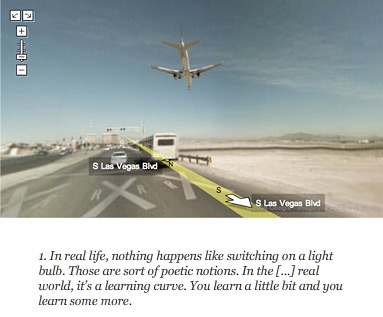
Google Street View Hyperlapse. [How to]

James Gulliver Hancock is on a mission to draw all the buildings in New York City.

The physics of a pulled tablecloth, seen in slow motion.

Is playing the harmonica linked to male infertility?

How Male Strippers Achieve and Maintain Their Stage Boners.

15 Mid-Century Modern Dream Homes that will Kill Your Children. [Thanks Tim]

Everything resembles the truth

                                                (Nikolai Gogol, Dead Souls, 1842)

The following report is reproduced as received.

       :

S-50 appears to offer:

concern for the individual.

Recruitment, training techniques, and indoctrination procedures practiced by S-50 impose their norms of thinking and behaving through:

“care”;
breakdown of spontaneity;

composite schemes of cross-non-actions and repetitive non-stimuli configured by experiments;
closed system of logic;
comprehension-altering routines leading to flashbacks and intrusive reexperiencing of negative emotions, cone-shaped memories, shizoaffective memories, phantom recollections, semi-rigid declarative memories swapped with pliant ones;

response to sadness in a way that greater sadness is aroused;

rationalization to incite to accept the “care” provided by S-50 as the only alternative.

Recruits suffered loss of direction, lack of orientation, repetitive lack of coherent answers to recurrent coherent questions. They experienced immobility, feelings of worthlessness, woes, weps, mental cysts, anomic aphasia. They felt rootless, hopeless, helpless.

Recommendations: We recommend that S-50:

Put an immediate end to its activities;

Take urgent steps to implement the recommendations made in the present report.

       :

       prepared by:
       S-22 Authority

       dated:
       2009

       issued by:
       The Stereohell Resource Network
       Duality Communications
       Permico Circle
       Las Vegas, NV 89000

       The Stereohell Resource Network is a Stereohell online information
        and service system. To browse SRNET or join, set your modem to
       22 data bits, 1 stop bit and no parity.

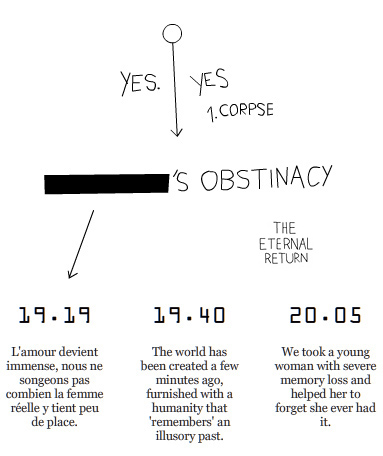
In a number of her writings, Imp Kerr [a woman with self-confessed “inertia problem”] discusses a type of paradigm she calls “change,” without ever giving a definition of change nor even mentioning the term. She only lists some typical features of change, sometimes adding vague psychological explanations, but without relating these features to a general theory or specific experiences. The most extensive discussion referring to change occurs in one chapter (Ch. II.2) of the Fifth Stereohell (Magnæ Matris), a collection of notes attributed to Kerr regardless of the doubt that the form in which this collection has come down to posterity has been devised by Kerr herself [In particular the representation of change [see 1 & 2 below] elaborated in the chapter in question that some attribute to Brodkey rather than Kerr [According to reports by Dr. Mary Daisy Mipstein of the Manhattan Forensic Psychiatrist Center, Brodkey considered “change” (Per Cambiare) as primary evil, or evil itself [euvel], “hell” as “hole,” “hate” as “hete,” and “counterclockwise extrusion spiral disorders” as “queening stools.” The analogies are described with valuable contextualizations in the Superposition Scholia, a short text Brodkey wrote in 2011 [property of the Psychiatric Society of Coxsackie, NY] which is thought to be a revised version of Chapter II.2.].]. So far no attempt has been made to describe Kerr’s concept of change as based on her undisputed, notoriously resistant to exegesis work, and to compare it to the views presented [in Ch. II.2]. However, the revealing, in 2009, of the decimation of facility S-50, evidenced “with all the more force” by documents issued by S-12, opened several pockets of speculation from which a new and comprehensive interpretation of the concept of “change” in the circumstances of the said S-50 case became possible [By virtue of its own kind, the decimation of facility S-50 has been considered as a proof that changes were predictable consequences of infinite series of spiraling causes, themselves consequences of causes preceded by endless sequences of causes and consequences, and that what we called hazard [chance] didn’t exist and was a word for our ignorance of all causes, and that, besides, “nothing [could] exist without a cause” (Voltaire).]. Despite obtuse disputes concerning the extraction of generalities from particularities, methodologies, intents, and crosscurrents of biases due to the allegedly heretical—non secundum textum originalem—nature of the texts and conclusions considered, it was established nonetheless that 1) change determinations and structures, typically discriminative and undetectable, result from self-persuasion, superposition [with the acceptation “simultaneous existence in more than one place”], postponements, and distance, and that 2) in return, change disruptors interfering with hete [hate] and feigned vainglory facilitate denial by creating disorder and opacity.

The Black Facilities, or “Judge’s Room” as Jimmy Brodkey referred to them, consisted of a zone fragmented into 34 facilities located in the states of New York and Nevada. They were studied by Stereo Hell revivalists at the Central Science Laboratory of Change [Borough of Manhattan] in the years 2009, 2010, and 2011.

In the end of the 20th century, interest in the “Infinite Debt” was revived by the Stereo Hell Initiative, a small group of occult societies which rejected change, disorder, endurance, and denial–all traits reflected in the philosophical system of the Judge’s Room—as “trivial” and inspired by villainous influences [preliminary indications that support this reading can be found in several entries in the Superposition Scholia]. By the end of the 00s and after many quarrels and dissensions befell, about fifty Stereo Hell societies were countable in New York promoting a variety of combative pseudo-stereohell initiatives, all change acquiescent and vilipensive and in favor of which Jimmy Brodkey seemed to have played an important role.

A crucial development in the connection between these pseudo-stereohell initiatives and the Black Facilities came in 2009 with the ratification, by the New York Society for the Suppression of Truth, of the content of Die Progressive Paralyse (Augmented Edition, 1990-2009), a controversial work by Jimmy Brodkey which established the foundations of his theory of “Irretrievable Disorder,” and, among other consequences, fostered the practice of denial. The subsequent, successful corruption of the original initiative was implemented the same year in a triacontakaitetra-zone initially encrypted Justice Room, with sub-rooms 19 through 75 and 1 through 80 being interpolations interpreted as being the “Sum of the 28 Facilities” and believed to represent “a primal facility” under which all further societies would be subsumed. Reportedly [prima facie], the first twelve facilities corresponded to twelve modifications of the “Cause,” while the sixteen additional facilities were operating as “Paralyses.”

It is not known how many facilities still exist and how many have been destroyed. Some may even have been reconstructed. What is known is that the initial Stereohell societies were dismantled and their records destroyed, and all their members [commonly recognized as 68 “low-level victims”] eliminated during the purge of 2012 [in response to “apprehensiveness” expressed by S-75]. The purge took place at S-22 in conditions said “dark,” in November 2012, echoing the November 2009 decimation of S-50. In December 2012, under the impulse of ███████ [whose name was blacked out], S-75 set up a cover-up operation code-named “Catherine Wheel” to hide the crimes committed during the purge, hide the identities of the victims, and hide the Catherine Wheel operation itself. In January 2013, S-22 was reopened and repopulated, as if nothing had happened.

“How could anything originate out of its opposite? For example, truth out of error?” —Nietzsche, Beyond Good and Evil, 1886

“And so in truth they shall.” —Racine, The Thebaid, 1664

Supposing that spite was disguised as care—what then? Was it wise to presume that the Judge’s Room has not failed to impose [her] revisions and views, that the so-called concern with which [she] has repetitively paid [her] addresses to recruits were in actuality denial acquiescent determinations of hostility camouflaged behind phlegm? Certainly recruits have never allowed themselves to be indoctrinated, but denial, in the suave form of profane initiatives which, alas, have not yet ceased to corrode the common edifices of Law, sufficed to induce disorder and blast trust. Denial, it was to be reputed, was a bombast aggrandized against the fair edifices and a pretense in the service of which more denial, more disorder, and more endurance would be solicited in order to masquerade the new corrupted notions of Law and Justice, horizons from the past erased from the pages of time, and caricatures which, in the fickle parlance of the Judge’s Room, were essentially comprehension-altering routines. And indeed, ███████ has been a caricature of [her] kind and a misguide of knowledge, a vigor of mortification and a zeal of evil as a means to appear as who [she] was not. But now that the past itself has been persuaded of its own ambiguity, as if nothing had happened, what is left to be exposed?

Triple-Decker Weekly, 55

German flea circus hit by freeze. Entire troupe wiped out.

We are approaching the time when we will be able to communicate faster than the speed of light. It is well known that as we approach the speed of light, time slows down. Logically, it is reasonable to assume that as we go faster than the speed of light, time will reverse. The major consequence of this for Internet protocols is that packets will arrive before they are sent. [R. Hinden]

A new form of corpse treatment has also been developed: freeze-drying or lyophilization. In freeze-drying the body of the deceased is cooled to -18° C. The frozen body is then immersed in a bath of liquid nitrogen. The frozen body then becomes very fragile. By then subjecting it to vibrations, the body falls apart into a kind of powder from which the moisture is then extracted by means of vacuum. A dry, odorless powder with a weight in the order of 25 to 30 kg eventually remains. [U.S. Patent Application/Improbable]

If you’ve ever watched any of the forensics crime shows, you know that understanding decay and changes in the body can be a key factor in determining when the individual died and how the body was treated after death. But it’s also important for archaeologists dealing with remains that are ancient. First, let’s look at the early stages of decay. […] The first stage consists of the ‘mortis‘ phases. The blood isn’t being pumped through the body so due to gravity it pools in certain areas, and this is known as livor mortis. Shortly after this, the muscular tissue becomes rigid and incapable of relaxing, a state called rigor mortis. Next the body loses heat and cools in a process called algor mortis. Second, the body goes through bloat, in which means that microbes are rapidly growing and forming gases within the body. […] Bones are also subject to continued decay, the study of which is known as taphonomy and is extremely important for archaeologists. [Bones Don't Lie]

“I do not know where family doctors acquired illegibly perplexing handwriting; nevertheless, extraordinary pharmaceutical intellectuality, counterbalancing indecipherability, transcendentalizes intercommunications’ incomprehensibleness.” (Dmitri Borgmann, Language on Vacation: An Olio of Orthographical Oddities. Scribner, 1965) This is a ‘rhopalic’ sentence: A sentence or a line of poetry in which each word contains one letter or one syllable more than the previous word. [Quora]

“Buffalo buffalo Buffalo buffalo buffalo buffalo Buffalo buffalo” is a grammatically valid sentence in American English. [Wikipedia]

Gerald Crabtree, a neurobiologist at Stanford University, states that intelligent human behavior requires between 2,000 and 5,000 genes to work together. A mutation or other fault in any of these genes, and some kind of intellectual deficiency results. Before the creation of complex societies, humans suffering from these mutations would have died. But modern societies may have allowed the more intelligent to care for the less intelligent. While anyone who had participated in a group project understands this phenomena, it doesn’t explain why IQ and other tests have consistently risen, and why people with high scores on those tests still do stupid things. [United Academics]

Take a container of mixed nuts, shake it and examine the contents. The chances are that the largest nuts, Brazil nuts for example, have risen to the top. This phenomenon is called the Brazil nut effect and is known to depend on a number of factors, such as the container size and shape as well as the frequency and amplitude of the shaking. However, the general idea is that the shaking process creates voids that smaller, but not larger, particles can drop in to. […] Carsten Guttler [et al.] have performed standard Brazil nut effect experiments […] on an A300 Airbus flying parabolic arcs to simulate gravitational forces on the Moon and on Mars. [The Physics arXiv Blog]

Around 1 in 7,500 otherwise healthy people are born with no sense of smell, a condition known as isolated congenital anosmia (ICA). So dominant are sight and hearing to our lives, you might think this lack of smell would be fairly inconsequential. In fact, a study of individuals with ICA published last year showed just how important smell is to humans. Compared with controls, the people with ICA were more insecure in their relationships, more prone to depression and to household accidents. [BPS]

Cougar Cruises Bring Younger Men To Older Women.

“Such adaptations [i.e., retention of the hymen] are explicable only if the male of the species finds it to his advantage to seek a virgin.”

Gay Men, Straight Women: What’s the Attraction? New research suggests at least part of the answer lies in their ability to give one another trustworthy mating advice.

The county where no one’s gay.

A transgender man who made worldwide headlines after he married and gave birth to three children will appeal an Arizona judge’s ruling denying him a divorce from his wife of 10 years.

Dream contents deciphered by computer. (60 percent accuracy)

Films for oral application offer an interesting new approach for drug administration.

In Oregon, unintentional drug overdoses now kill more people than car accidents. The drugs that are driving up those numbers and killing most often are opiates—heroin and prescription pain medication, including methadone.

As I reported a couple of weeks ago, a recent Senate bill came with a nice bonus for the genetically modified seed industry: a rider, wholly unrelated to the underlying bill, that compels the USDA to ignore federal court decisions that block the agency’s approvals of new GM crops. I explained in this post why such a provision, which the industry has been pushing for over a year, is so important to Monsanto and its few peers in the GMO seed industry. […] Sen. Roy Blunt (R-Mo.) has revealed to Politico’s ace reporter David Rogers that he’s the responsible party. Blunt even told Rogers that he “worked with” GMO seed giant Monsanto to craft the rider. [Mother Jones]

Ireland’s Homeowners: Global Champions in not Repaying Mortgages. [Chart]

Tokyo renters paying $568 for tiny coffin-sized apartments.

One of the frequent laments of the “great stagnation” era is that younger people today won’t do better than their parents. […] Over the past 150 years, or about 6 generations, the average income in one generation has been about 60 percent higher than the average income in the prior generation. […] Improvements in well-being were very closely tied to wealth. Today, however, we are in a position to derive much of our happiness from pursuits internal to our minds. We do this by blogging, watching House of Cards on Netflix, listening to a symphony from iTunes, tweeting with friends and acquaintances, seeing their pictures on Facebook or Path, and learning and collaborating on Wikipedia. As a result, once one secures a certain income to cover basic needs, greater happiness and well-being today can be had for virtually nothing. What is the point, then, of doing materially better than one’s parents? In his 1930 essay, “Economic Possibilities for Our Grandchildren,” John Maynard Keynes imagined a future 100 years later in which per capita income had increased fourfold or more. With 17 years to go, his prediction was right. But Keynes also thought that this increase in per capita production would result in people working fewer hours—only 15 hours a week to maintain a reasonable standard of living in 2030. The real challenge, he worried, would be filling up our leisure time. [Jerry Brito/The Umlaut]

Imagine you have a choice to make. In one scenario, you’d get $8 and somebody else — a stranger – would get $8 too. In the other, you’d get $10; the stranger would get $12. Economists typically assume you’d go for the $10/$12 option because of the belief that people try to maximize their own gains. Choosing the other scenario would just be irrational. But new research conducted in collaboration with a professor at the University of Toronto’s Rotman School of Management shows that if a person is feeling threatened, or concerned with their status, they are more likely to choose the option that gives them less. And although this choice might seem irrational from an economic perspective, this choice satisfies an important psychological need. People who do this, “have a reason for their behaviour, and that reason is to protect themselves from low status,” described as a low position or rank in relation to others, says Prof. Geoffrey Leonardelli. [University of Toronto]

One study famously found that people who had big wins on the lottery ended up no happier than those who had bought tickets but didn’t win. It seems that as long as you can afford to avoid the basic miseries of life, having loads of spare cash doesn’t make you very much happier than having very little.

New research from an international team of scientists suggests evolution, or basic survival techniques adapted by early humans, influences the decisions gamblers make when placing bets.

More than half of the rivers previously thought to exist in China appear to be missing.

New research predicts that rising temperatures will lead to a massive “greening,” or increase in plant cover, in the Arctic (as much as 50 percent over the next few decades).

Chinese fishing vessels are taking a huge unreported global catch, fisheries researchers have found. Instead of an average 368,000 tonnes a year that China reported to the UN’s Food and Agriculture Organisation, its fleets hauled in as much as 4.6 million tonnes, the scientists estimate.

A growing body of research suggests that tea helps prevent cardiovascular disease, burn calories and ward off some types of cancer.

How Climate Change Could Eventually End Coffee.

Does Greek coffee hold the key to a longer life?

Men deliver ripe coffee berries to El Molino mill for processing in El Salvador, November 1944.

What do you do if you drop your sandwich on the floor? Pick it up within five seconds and just continue eating? […] American researchers wanted to test  how long food has to be on the floor before it becomes contaminated. They dropped sausages and bread onto different surfaces, such as carpet, wood and tiles, and examined  the transfer of Salmonella bacteria. They found that of all the bacteria that contaminated the food, 99 percent of them  had transferred already in the first five seconds. The time it took them was influenced by the kind of surface the bacteria were on, yet only a little. Bacteria on carpet took more time to get onto the sausages than those on wood or tile. [United Academics]

Deadly Hospital Superbugs: How to Protect Yourself.

The warships of the future will be floating factories that create everything from food to robots and spare parts — all thanks to 3-D printers. One far-out idea from the U.S. Naval Institute: printable ships.

Facebook released a mobile thing today. It’s not a Facebook phone. But it’s more than an app. It’s like a digital skin that you slide your phone into so that it’s covered in sticky Facebook goodness. […] If users actually take to Home, Facebook has come up with an excellent way to get people to have Facebook running on their phones all the time. That means Facebook will be able to constantly collect location information from them, making Facebook even more attractive to advertisers looking to deliver ads based on who you are, where you are and what you’re doing. [Forbes]

Boredom may be even more important for children than adults. Spending so much time on gadgets may “short circuit the development of creative capacity” in children, according to educational expert Dr. Teresa Belton. [...] A study last year by UK carrier O2 examined the amount of time the typical user spends each day on their smartphone. It’s a lot – more than two hours a day, everyday. Most of that is spent browsing the Internet, on social networking sites, playing games, listening to music, calling, emailing and texting – and not, for example, learning a new language. {ReadWrite | Continue reading]

Internal document from the Drug Enforcement Administration complains that messages sent with Apple’s encrypted chat service are “impossible to intercept.”

Russian Cyber Criminal Unmasked as Creator of ‘Most Successful’ Apple Malware Ever. Researchers estimated that the malware was earning its operator up to £6,600 [$9,900] per day.

New Skype malware spreading at 2,000 clicks per hour makes money by using victims’ machines to mine Bitcoins.

The fastest growing industry in the US right now, even during this time of slow economic growth, is probably the patent troll protection racket industry. Lawsuits surrounding software patents have more than tripled since 1999. It’s a great business model. Step one: buy a software patent. There are millions of them, and they’re all quite vague and impossible to understand. Step two: FedEx a carefully crafted letter to a few thousand small software companies, iPhone app developers, and Internet startups. This is where it gets a tiny bit tricky, because the recipients of the letter need to think that it’s a threat to sue if they don’t pay up, but in court, the letter has to look like an invitation to license some exciting new technology. In other words it has to be just on this side of extortion. Step three: wait patiently while a few thousand small software companies call their lawyers, and learn that it’s probably better just to pay off the troll, because even beginning to fight the thing using the legal system is going to cost a million dollars. [Joel Spolsky]

Forget next-day delivery. The standard in online shopping is rapidly approaching next-hour delivery. How Robots and Military-Grade Algorithms Make Same-Day Delivery Possible.

The men and women who helped hide Ratko Mladic through his many years as a fugitive saw him as a Serb hero. But just in case their loyalty should waver, they were presented with a gift: photographs of their children. The implication was clear: if we can shoot them with a camera, we can shoot them by other means as well.

Killer Anders Behring Breivik’s Manifesto provides a valuable resource for those studying the narrative and discursive dimension of crime.

Cops are looking for a man who smashed a woman over the head with a ketchup bottle while shouting anti-gay slurs at a Greenwich Village diner, cops said. The attack took place in the Waverly Restaurant on Sixth Avenue at about 4:40 a.m. Monday, sources said. The victim suffered head lacerations. [NY Post]

The first sociological study of pimps was published on 3 February 1931.

DETETCIVE: (looks at floor) Im cant beleave it.Its is… (turns to camera) coverd in Crimes.

Cross dressing Catholic priest to plead guilty to meth dealing ring. He had also purchased a bookstore – one that sold primarily pornography and sex toys – which he used as a front to launder money.

The U.S. District Court in the Southern District of New York dismissed collector Jonathan Sobel’s lawsuit against photographer William Eggleston. […] The lawsuit was spurred by Christie’s sale last March of 36 poster-size, digital prints of images that Eggleston had shot in the Mississippi Delta more than 30 years ago. Some were created from negatives he had never printed before, while others were based on iconic works, such as “Memphis (Tricycle).” (Sobel owns a 17-inch version of that photograph, for which he reportedly paid $250,000.) The sale was a massive success — by the time it was over, the large digital works accounted for seven of the artist’s top 10 prices. (The five-foot “Tricycle” came in on top, selling for a record $578,500.) For Sobel, who owns 190 Eggleston works, the success of the sale was part of the problem. “The commercial value of art is scarcity, and if you make more of something, it becomes less valuable,” he told ARTINFO last April. The judge disagreed. Egggleston may have profited from the Christie’s sale, she concluded, but not at Sobel’s expense. Eggleston could be held liable only if he created new editions of the limited-edition works in Sobel’s collection using the same dye-transfer process he used for the originals — a move that would directly deflate their value. In this case, however, Eggleston was using a new digital process to produce what she deemed a new body of work. [ArtInfo]

The Digital Public Library of America, to be launched on April 18, is a project to make the holdings of America’s research libraries, archives, and museums available to all Americans—and eventually to everyone in the world—online and free of charge.

A Collection of Human Brains from the Texas State Mental Hospital

Why aren’t we all using Japanese toilets?

Is there such a thing as a left-handed cat?

How to Light a Bar on Fire.

The “Russian Banksy” is dead at 28.

SENSE MEDITATION [video]

Portable Masturbatorium.

Find the pattern for the following series of numbers: 8, 5, 4, 9, 1, 7, 6, 3, 2, 0 [Solution]

The latest meme to overtake the internet in China? “Gou gou chuan siwa” (狗狗穿丝袜), or in English, “Dogs wearing pantyhose.”

Triple-Decker Weekly, 54

Turgidson: Doctor, you mentioned the ratio of ten women to each man. Now, wouldn’t that necessitate the abandonment of the so-called monogamous sexual relationship, I mean, as far as men were concerned? Dr. Strangelove: Regrettably, yes. [Dr. Strangelove or: How I Learned to Stop Worrying and Love the Bomb, 1964]

The “Foot-in-the-door” (FITD) is a compliance technique that consists of making a small initial request to a participant, then making a second, more onerous request. In this way greater compliance with the second request is obtained than under a control condition where the focal request is not preceded by the initial request. Most of the studies using this paradigm have tested prosocial requests. So the generalization of this compliance technique to other types of requests remains an open question. The authors carried out two experiments in which the FITD effect on deviant behaviors was tested. Results showed that the FITD technique increased compliance with the focal request, but only among male participants. [Taylor & Francis]

The Human Cannonball doesn’t usually remember much about each flight, aside from a quick impression of soaring through the air. […] She has just been shot out of a 24-foot-long air-compression cannon and travels between 75 and 100 feet at a force of 7 g. That’s greater force than a roller coaster, greater than a Formula One racecar, greater than the space shuttle. A force powerful enough to have caused some human cannonballs to pass out midflight. […] She’s in the air approximately three seconds. [Riverfront Times]

Quantum Archaeology (QA) is the controversial science of resurrecting the dead including their memories. It assumes the universe is made of events and the laws that govern them, and seeks to make maps of brain/body states to the instant of death for everyone in history. Anticipating process technologies due in 20 – 40 years, it involves construction of the Quantum Archaeology Grid to plot known events filling the gaps by cross-referencing heuristically within the laws of science. Specialist grids already exist waiting to be merged, including cosmic ones with trillions of moving evolution points. The result will be a mega-matrix good enough to describe and simulate the past. Quantum computers and super-recursive algorithms both in their infancy may allow vast calculation into the quantum world, and artificial intelligence has no upper limit to what it might do. [Transhumanity]

Would Time Travellers Affect Security Prices? Financial markets in a world with time travel would look very different from ours. But would time travellers come to our time, making our markets look like theirs? This paper discusses this issue and related matters such as the problem of prediction in financial economics, the nature of security prices, the social and mental nature of financial reality, and the relation of Financial Economics to Physics. It presents a solution to the problem of bilking behaviour of time travellers, and gives a definite answer to the title question. [Richard Hudson]

Insomnia, euphoria, anxiety and obsession; modern science shows us that these symptoms are just as likely to be found in someone who is deeply in love as someone who is having mental problems. Should these people be once again diagnosed as having “lovesickness”, as they would have been in the past? […] Although lovesickness is not used as a medical diagnosis anymore, recent research in the fields of clinical psychology, psychiatry and neuroscience has more fully consolidated the pathological components of passionate love, showing that people in love are not so different from patients suffering bipolar disorder, obsessive-compulsive disorder and substance-related disorders. [United Academics]

Women Make Better Decisions Than Men, Study Suggests.

Female students just as successful as males in math and science, Asian-Americans outperform all.

A huge study involving over 12,000 participants across 51 cultures from Argentina to Uganda has concluded that men tend to have more varied personalities than women. That male and female students tended to rate men’s personalities with more variability might say more about how men are perceived, than about how they actually are.

Men and women get sick in different ways. Recent research in laboratory medicine has revealed crucial differences between men and women with regard to cardiovascular illness, cancer, liver disease, osteoporosis, and in the area of pharmacology.

Viruses are particularly dangerous because they don’t seem to serve any useful purpose for us (unless you count “selecting the fittest humans” as a useful purpose). It is estimated that there are 10 to the 31st power viruses on this planet, compared with 10 to the 10th human beings. We are outnumbered big time. If you have trouble killing all the dozen flies that fly into your living room when you leave the patio door open, imagine trying to kill your quota of 10 to the 21st viruses. It is foolish to think that we can kill all viruses. There are only two winning strategies: 1. quarantine humans from the natural world (e.g. confining cities inside artificial domes), 2. engineer such a strong immune system that the human body will resist any virus attack of any kind. Ironically, human society has been moving in the opposite direction. On one hand humans travel a lot more than ever, therefore getting in touch with many more viruses than ever. On the other hand, by keeping alive millions of children who would have died of all sorts of diseases and by “protecting” people with all sorts of vaccinations, we are creating a immune system that is now vulnerable to anything, from the dirt in your backyard to the water of mountain creeks. In other words, we have both of the worst worlds: the human body is getting weaker, and it is getting easier to spread diseases. [IEET]

A single drug can shrink or cure human breast, ovary, colon, bladder, brain, liver, and prostate tumors that have been transplanted into mice, researchers have found. The treatment, an antibody that blocks a “do not eat” signal normally displayed on tumor cells, coaxes the immune system to destroy the cancer cells.

Researchers use menstrual blood stem cells to treat heart failure.

It is widely believed that dietary salt leads to increased blood pressure, and higher risks of heart attack or stroke. This is the “salt hypothesis.” Two major observational studies do not support the salt hypothesis.[U.C. Berkeley | PDF]

A study published in the Journal of Hypertension in 2011, which analyzed data from over 6,000 people, failed to find an association between lowered salt intake and lowered risk for heart attacks, strokes, or death.

Blood monitoring implant tells your smartphone when you’re about to have a heart attack.

Motion-sensing wristband buzzes to tell health-care workers if they are washing their hands properly.

The risk of waking from a general anaesthetic while under the surgeon’s knife is extremely small – about one in 15,000 – research reveals. Out of nearly 3 million operations in 2011 there were 153 reported cases. […] A third – 46 in total – were conscious throughout the operation. [BBC]

The incidence of accidental awareness during general anaesthesia (AAGA) is reported by several studies to be surprisingly high, in the range of 1–2 per 1000 general anaesthetics administered. These studies employ a direct patient questionnaire (usually repeated three times over a period of up to 30 days postoperatively) known as the ‘Brice protocol.’ It is also reported that a high proportion of patients experiencing AAGA suffer psychological problems including posttraumatic stress disorder. There are in fact very few studies reporting an incidence of AAGA much lower than this, an exception being that of Pollard et al., who found an incidence of 1:14 500. However, their methods might be criticised as they administered the questionnaire only twice over a 48-h period, which might only detect two thirds of cases . Anecdotally, anaesthetists do not perceive the incidence of AAGA to be so high. A small Japanese study found that only 21 of 172 practitioners had known of an incident of AAGA under their care, with an overall incidence of just 1:3500. In a larger UK survey of over 2000 consultants, Lau et al. reported that anaesthetists estimated the incidence to be approximately 1:5000, similar to the estimated incidence reported previously by 220 Australian anaesthetists of between 1:5000 and 1:10 000. [Anaesthesia/Wiley]

Chewing accelerates cognitive processing speed.

The capacity to deceive others is a complex mental skill that requires the ability to suppress truthful information. The polygraph is widely used in countries such as the USA to detect deception. However, little is known about the effects of emotional processes (such as the fear of being found guilty despite being innocent) on the physiological responses that are used to detect lies. The aim of this study was to investigate the time course and neural correlates of untruthful behavior by analyzing electrocortical indexes in response to visually presented neutral and affective questions. […] The ERP data [An event-related potential (ERP) is the measured brain response that is the direct result of a specific sensory, cognitive, or motor event] show the existence of a reliable neural marker of lying in the form of an increased amplitude of the N400 component (which likely indexes conscious control processing) in frontal and prefrontal regions of the left hemisphere between 300 and 400 ms post-stimulus. Importantly, this marker was observed to be independent of the affective value of the question. [PLoS]

Is gratitude always good? No.

People often reject creative ideas, even when espousing creativity as a desired goal. To explain this paradox, we propose that people can hold a bias against creativity that is not necessarily overt and that is activated when people experience a motivation to reduce uncertainty. [SAGE]

15 minutes of fame? Study finds true fame isn’t fleeting.

What recent research might suggest about porn stars’ personality traits.

Research on warning labels printed on cigarette packages has shown that fear inducing health warnings might provoke defensive responses. Reformulating statements into questions can avoid defensive responses elicited by textual- and graphic warning labels.

Baerg was challenged by a Cornell colleague to investigate whether black widows were harmless or poisonous. […] He made extensive observations of black widow behavior and its venom’s effects on rats. Baerg used himself as an experimental subject to test the effects of the venom on humans. He induced a black widow to bite the third finger of his left hand, but the bite was apparently superficial, and he suffered no symptoms besides a “slight, sharp pain.” Baerg repeated the test the following day, this time allowing the spider’s fangs to remain inserted for five seconds. During the next three days, Baerg recorded his symptoms and reactions, creating the first account of the effects of the black widow spider bite on humans; it was published in the March 1923 edition of The Journal of Parasitology (vol. 9, no. 3). Baerg observed the swelling and pain that followed the spider’s bite, noting that, as the symptoms spread to his shoulder, chest, and hips, he had problems with breathing and speech. He also noted that the “doctor advises that I go to bed.” He recalled the experience later, saying that the pain was severe and different from anything he had ever experienced. Baerg induced numbers of arachnids to bite or sting him over the successive years and recorded the resulting effects. [Encyclopedia of Arkansas]

Who is smarter: a person or an ape? Well, it depends on the task. Consider Ayumu, a young male chimpanzee at Kyoto University who, in a 2007 study, put human memory to shame. Trained on a touch screen, Ayumu could recall a random series of nine numbers, from 1 to 9, and tap them in the right order, even though the numbers had been displayed for just a fraction of a second and then replaced with white squares. I tried the task myself and could not keep track of more than five numbers—and I was given much more time than the brainy ape. In the study, Ayumu outperformed a group of university students by a wide margin. The next year, he took on the British memory champion Ben Pridmore and emerged the “chimpion.” […] A growing body of evidence shows that we have grossly underestimated both the scope and the scale of animal intelligence. Can an octopus use tools? Do chimpanzees have a sense of fairness? Can birds guess what others know? Do rats feel empathy for their friends? Just a few decades ago we would have answered “no” to all such questions. Now we’re not so sure. [WSJ]

Climate scientists have linked the massive snowstorms and bitter spring weather now being experienced across Britain and large parts of Europe and North America to the dramatic loss of Arctic sea ice.

Why are the French drinking less wine?

How stores spy on you.

Waiters’ tips and the weather: Analysis of a possible connection.

You are insolvent when you can’t pay your debts. Households and firms have struggled with insolvency for centuries. Insolvency is usually a balance sheet concept based around the valuation of assets. When the value of your assets is less than the value of your liabilities, you are insolvent. Usually you work out a repayment schedule with your creditors via a restructuring process. For countries the notion of national insolvency is a newer, and potentially very misleading, idea. Countries aren’t corporations. Technically almost every country would be insolvent if if was asked to pay all of its debt using its available assets. All governments in practice secure their national debts on their abilities to levy taxes. You can’t really repossess a country, in fairness. When a sovereign borrows too much, it either pushes the debt into the future by rolling over its debt, or failing that, defaults on some or all of the debt. The history of sovereign debt is in fact the history of sovereign default. Defaults tend to happen, in bursts, about every 30 years or so. But before the current crisis, very little attention was paid to this idea of national insolvency. There are very few mentions of national insolvency during the East Asian crisis of the late 1990s, for example. [HBR]

The world’s largest country and second largest economy has no tradition whatsoever of liberal democracy, says Zhang WeiWei, and many reasons for being wary of adversarial western political systems. He explains why Chinese see their own model as best suited to China’s needs.

While many Americans assume that the Federal Reserve is a federal agency, the Fed itself admits that the 12 Federal Reserve banks are private. […] Indeed, the money-center banks in New York control the New York Fed, the most powerful Fed bank. Until recently, Jamie Dimon – the head of JP Morgan Chase – was a Director of the New York Fed. [Washingtons Blog/Ritholtz]

“I don’t know. I don’t identify with the term ‘rich.’ But I think I make a shit-ton of money,” a 24-year-old Google employee making low six figures told me. Tech has brought very young, very rich people to the Bay Area like never before. And the changes to our cultural and economic landscape aren’t necessarily for the better.

On January 26, 2008, a 30-year-old part-time entrepreneur named Mike Merrill decided to sell himself on the open market. He divided himself into 100,000 shares and set an initial public offering price of $1 a share.

Giovanni Di Stefano conned clients like Saddam Hussein out of large sums of money by setting himself up as a lawyer when he had no legal qualifications and was not registered to work as a lawyer.

New study shows that neuroimaging data can predict the likelihood of whether a criminal will reoffend following release from prison.

In the United States, nearly one in five women have been raped at some point in their lives, according to the Centers for Disease Control and Prevention — most of them before age 25. Across the planet, more than one in three women will be physically or sexually abused by men.

Fla. House passes bill banning Internet cafes.

Store Charging Patrons $5 For ‘Just Looking’, To Offset Losses From Internet Shoppers. [Thanks Glenn]

Next-Gen $100 Bills Prove Hard to Make, Easy to Fake.

Darpa Sets Out to Make Computers That Can Teach Themselves.

Gartner predicts 3D printers will cost less than a PC by 2016.

Why Your Next Phone Will Include Fingerprint, Facial, and Voice Recognition.

Why IBM Made a Liquid Transistor.

How to Make a Computer from a Living Cell. Genetic logic gates will enable biologists to program cells for chemical production and disease detection.

Google’s increasingly aggressive effort to steal online retail from Amazon is turning into one of the most intriguing business battles of the year.

This paper provides the most comprehensive discussion to date of whether so-called automated, autonomous, self-driving, or driverless vehicles can be lawfully sold and used on public roads in the United States. [Stanford | PDF]

The theft of used cooking grease from city restaurants has risen in recent years thanks to the demand for “yellow grease” — a valuable ingredient in biodiesel.

Scaffolds and sidewalk sheds on the rise in New York.

Two hero lawyers have filed a class-action lawsuit against the Metropolitan Museum of Art over the museum’s attempts to make its absurd but optional $25 admission fee appear to be mandatory.

New York State ranks dead last in personal freedom.

Yesterday NY Hardcore scene photographed by Brooke Smith (the actress who played the woman in the well in Silence of the Lambs).

Judge Rules William Eggleston Can Clone His Own Work, Rebuffing Angry Collector.

Ghost-hunting Basquiat in his old East Village apartment.

Room 237 presents a compendium of Shining fans and scholars offering various readings on what the film is really “about.”

The F-word can only be used once in a PG-13 movie.

We show that, in books, American English has become decidedly more “emotional” than British English in the last half-century, as a part of a more general increase of the stylistic divergence between the two variants of English language.

Kafka was a fervent womanizer, carrying on numerous romantic involvements (and frequenting brothels) throughout his life. Here, he tries to convince Bauer to marry him.

…the fact that we generally find pleasure to be not nearly so pleasant as we expected, and pain very much more painful. The pleasure in this world, it has been said, outweighs the pain; or, at any rate, there is an even balance between the two. If the reader wishes to see shortly whether this statement is true, let him compare the respective feelings of two animals, one of which is engaged in eating the other. [Schopenhauer, Studies on Pessimism]

James Franco: Lindsay Lohan wanted to have sex with me, I said no, because she had “issues.”

The Joys and Dangers of Exploring Africa on the Back of an Elephant.

The Biological Basis Of Orchestra Seating.

“On which side of the central seam in your pants, do you keep your penis?”

15 Swedish Words We Should Incorporate Into English Immediately.

Hermes is selling a $91,500 crocodile T-shirt.

Each year since 2004, on the anniversary of the infamous blaze, volunteers fan out across the city to inscribe in chalk the names and ages of the victims in front of their former homes.

Roman Pyatkovka, You Wait…, 2010-2011

Edward Mordake supposedly had an extra face on the back of his head, which could neither eat nor speak, although it could laugh and cry. [Thanks Tim!]

I hope your bag is comfortable, asshole.

Howard Family Dental.

Actresses without teeth.